
HOMEBUYER FLOOD RISK CHECKLIST
Buying a Home in a Flood Risk Area: What to Check in England
Use the flood map to guide questions for the seller, surveyor and conveyancer. Confirm what the property’s existing measures cover before specifying a doorway barrier.
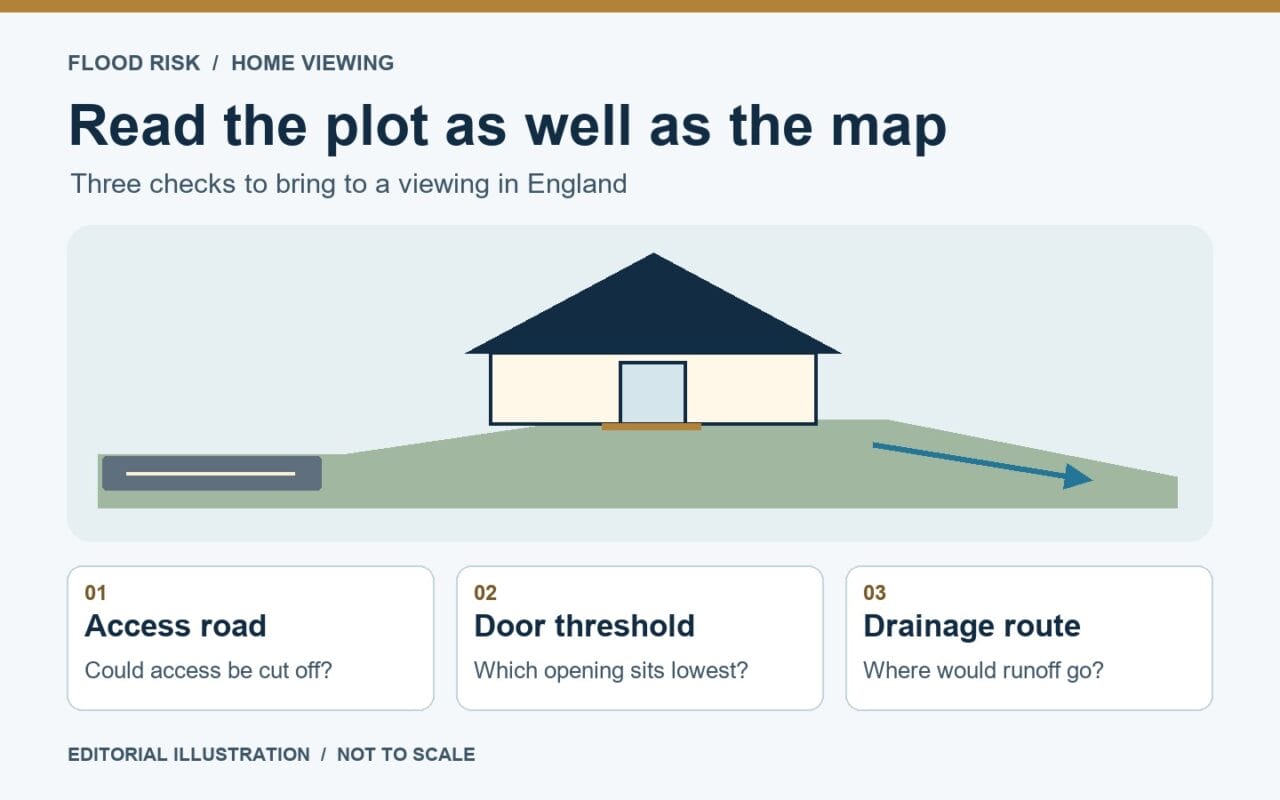
If you are buying a home in a flood risk area in England, check the area’s flood risk, the property’s flood history and the routes water could take before relying on a flood barrier. A removable barrier may be worth considering for a specific doorway. The purchase decision also depends on what would happen if water reached the house by another route or cut off access.
A homebuyer on the MoneySavingExpert forum asked whether adding door barriers would change their view of a new build near a river. The home reportedly had a raised finished floor and drainage measures. That raises a practical question for any buyer: what do those measures cover at this address, and what would a door barrier add?
Check the map, then ask what happened at the address
Start with the Environment Agency’s long-term flood risk service for England. Check river and sea flooding and surface water separately, then review the other sources the service reports. A planning flood-zone label is only part of the picture. The long-term service describes the area around the property and does not estimate the chance of that individual house flooding.
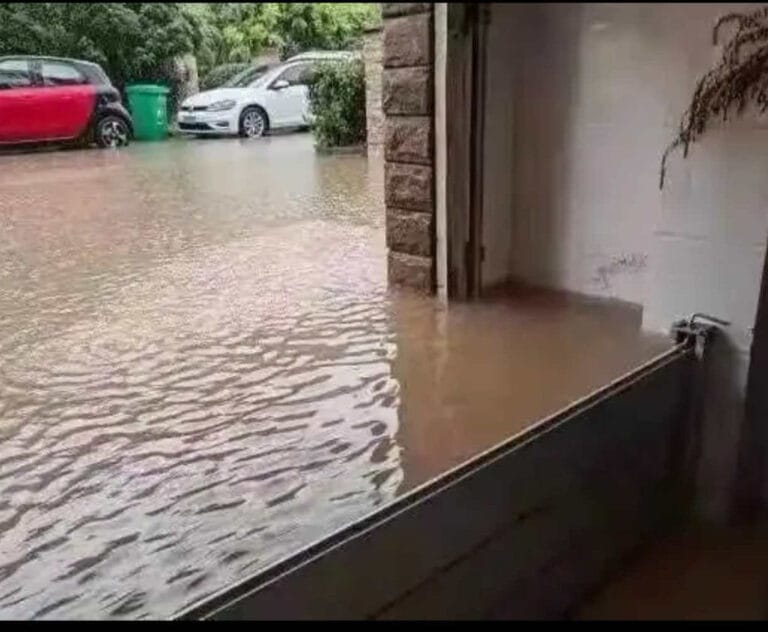
Ask the seller what flooded, when, where the water reached and whether it entered the building. A flooded garden, a blocked access road and water over the living-room floor are three different outcomes. Ask for dated photos or repair records if an incident is disclosed. You can also request local flood history from the Environment Agency. Its records are incomplete, so an empty result leaves a question open.
Check which protections were built and who maintains them
For a new build, ask for the site flood risk assessment, the relevant planning drawings and records showing what was actually installed. If the plan relies on raised floors, ask a surveyor to compare the finished floor and lowest external threshold with the levels in the documents. A step visible on a viewing gives you something to ask about. The recorded levels tell you whether the comparison is being made from the same reference point.
Ask who looks after any shared drainage, pumps or other measures that the property relies on. Find out where the water is intended to go and whether the drive or access road could be cut off while the house stays dry. Ask your conveyancer which documents and maintenance arrangements can be confirmed for the property.
Work out what a doorway barrier would change
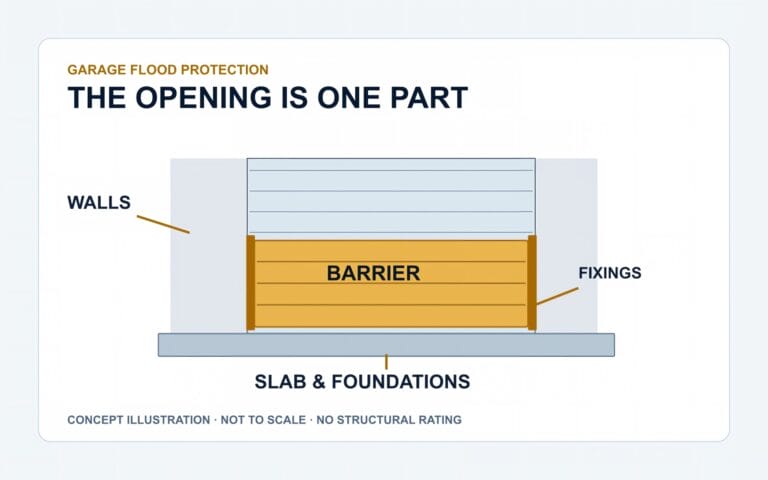
During the viewing, identify the lowest external openings and trace the plausible water route to each. A patio door may be a useful opening to assess when water could reach the threshold from the garden. If the main concern is a road that floods, water rising through a drain or water entering under the floor, those routes need their own review. The Environment Agency’s property flood guidance treats doors, walls, floors, ventilation openings and drains as separate points to consider.
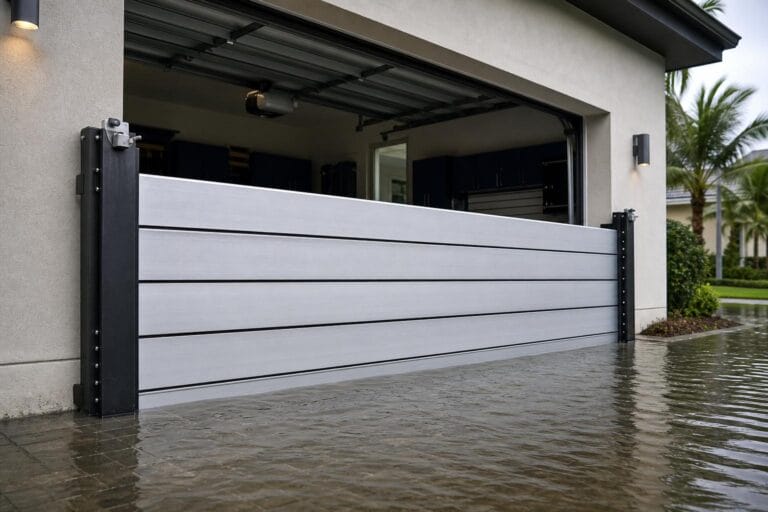
If barriers are already included in the sale, ask the seller which opening each set fits and request the model, instructions, maintenance record and a dry demonstration. Check where removable parts are stored and who could deploy them in time. For a proposed system, ask the supplier to state which opening and mounting surfaces it covers and what documentation applies to that configuration. Use the Eudore measurement and installation manual to see the sort of opening and fixing details a supplier will need.
Keep a short list of unresolved questions
Before committing, write down the evidence you have, who will answer each remaining question and what would change your decision. For example: The seller reports water in the garden. We still need the threshold level, records for the shared drain and information about access during a flood. Ask for actual insurance terms for the address and have your conveyancer or lender check any requirements that apply to the purchase.
If a doorway still looks like a plausible route after that review, contact Eudore for an opening-specific review. Share clear photos of both sides of the opening, the threshold and proposed mounting surfaces, plus any measured levels or site notes you can share. That gives the supplier a concrete question to answer while your surveyor assesses the wider property.
Continue your research
Related flood protection reading.
Read a connected guide, comparison or project insight before choosing a protection route.
Get a custom recommendation
Tell us about the opening you need to protect.
Share the opening type, clear width, target flood height and photos. The team will review the details before recommending a configuration.