
Garage flood protection guide
How to Protect Garage Doors From Flooding
Review where water enters your garage, what drainage and door seals can address, and when a removable flood barrier may suit the opening.
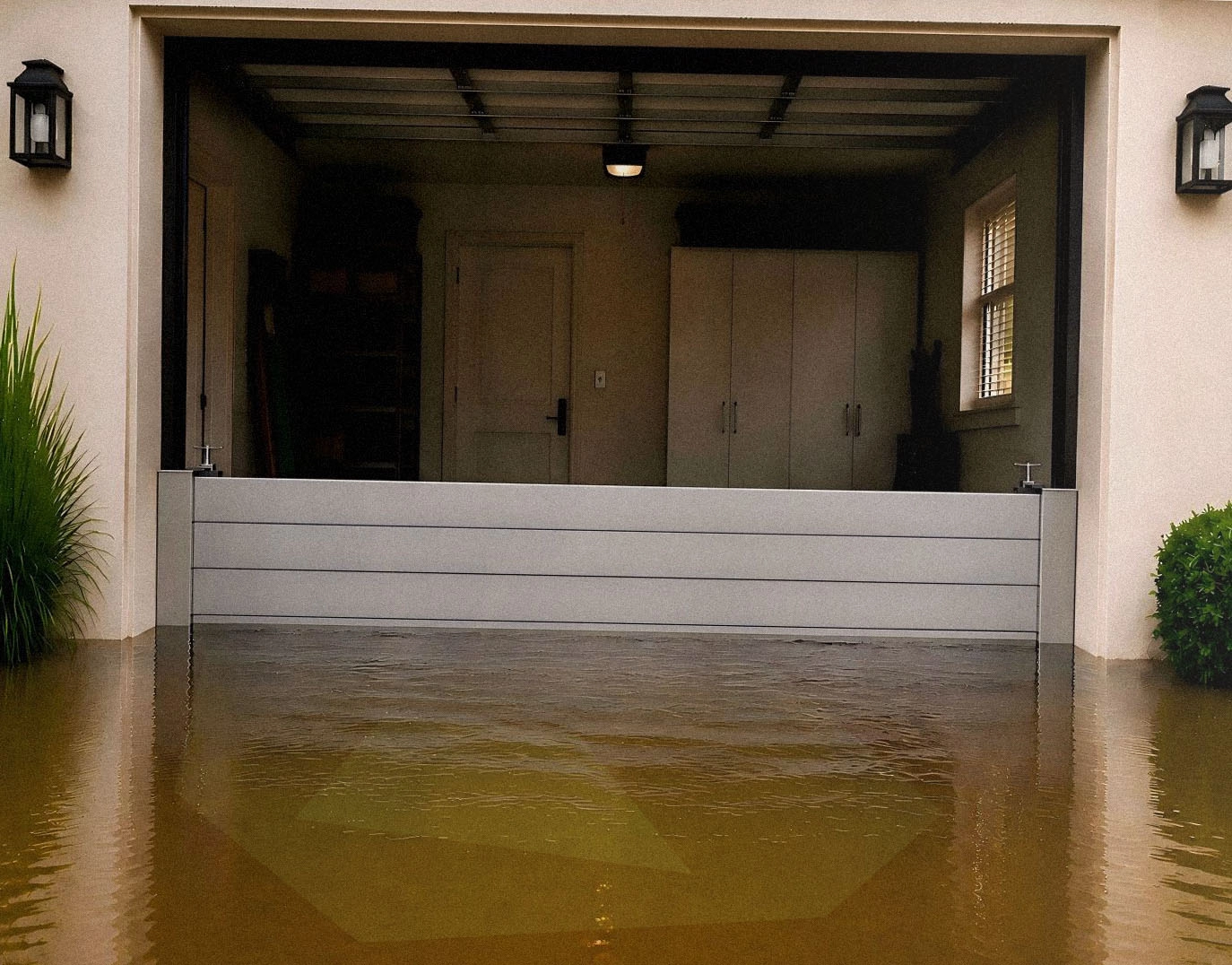
Quick answer
A layered approach gives a garage its best chance.
Start by identifying the water source and entry paths. Drainage and door-seal repairs address different problems from rising floodwater at an entrance. A removable barrier may form part of a site-specific plan, but its suitability depends on the opening, mounting surfaces, required protection height and who can deploy it. An opening barrier does not address every route water can enter a building.
Why garage doors flood easily
Garage doors are one of the most vulnerable openings on any property. During heavy storms or storm surge, water pressure can quickly push through small openings and damage vehicles, tools, stored belongings, drywall and electrical equipment.
Bottom seals
Age, uneven floors and small surface changes leave a route beneath the door.
Side gaps
Wind-driven rain and rising water can work around the outside edges.
Driveway slope
Water naturally collects at a garage when the surrounding grade channels it inward.
Compare the options
Common ways to protect garage doors from flooding
Each method has a place. The key is choosing one that matches the water depth, repeat risk and the need to seal the complete opening.
| Method | Best for | Limitations |
|---|---|---|
| Sandbags | Emergency temporary protection | Placement, handling and cleanup requirements; not a watertight guarantee |
| Flood bags | Shallow water and short-term use | Check the selected product’s rated conditions and reuse instructions |
| Water-filled barriers | Redirecting water around the property | Check whether the selected system suits the opening and available space |
| Drainage improvements | Reducing water buildup around driveways | May not stop storm surge or high floodwater |
| Custom aluminum flood barrier | Repeat deployment at a suitable garage opening | Requires suitable mounting surfaces, measurement, installation and deployment |
Long-term option
Custom aluminum garage flood barrier
For repeated flood risk, a fitted aluminum system creates a practical line of defence across the garage opening.
Once the side posts are installed, panels can be slotted in quickly before flooding, then removed, cleaned and stored after the event.
Before you request a quote
How to measure your garage opening
Clear measurements and a few photographs let the team review how the opening should be protected.
Measure the full inside width of the garage opening.
Measure the height you want to protect against floodwater.
Take photos of the left side, right side, bottom floor and full garage opening.
Check whether the driveway slopes toward the garage.
Send the measurements and photos for a custom recommendation.
Need help reviewing the opening? Use our custom opening review service and share dimensions and photos to discuss the proposed configuration.
Plan before severe weather
Mistakes homeowners should avoid
Barrier too short
If water rises above the barrier height, it can overflow into the garage.
Ignoring side gaps
Water can enter through small gaps on the sides of the opening.
Overlooking other entry paths
Check the wider site as well as the entrance. A barrier across the door does not resolve every drainage or building-envelope problem.
Waiting until the last minute
Prepare flood protection before heavy rain, hurricanes or storm surge arrive.
Garage flood protection FAQ
Questions to answer before the next storm
How do I stop water from entering my garage?
Identify whether the problem is rain runoff, gaps around the door or rising floodwater. Review drainage and seals, then assess whether an opening barrier is appropriate. Compare garage flood barrier options against the actual site conditions.
Can floodwater enter through a garage door?
Yes. Garage doors often have bottom and side gaps that allow water to enter during heavy rain, flash flooding or storm surge.
Are sandbags good for garage doors?
Sandbags are a temporary option that requires placement and handling. Their suitability depends on the situation and arrangement. Read the flood barrier and sandbag comparison when planning preparation and storage.
What is the best flood barrier for garage doors?
There is no single best barrier for every garage. Compare opening width, protection height, mounting surfaces, access and deployment needs. Review the removable garage flood barrier product if manual panel deployment fits your plan.
How high should a garage flood barrier be?
The right height depends on your local flood risk, previous water levels, driveway slope and the level of protection required.
Can I install a garage flood barrier myself?
Installation and temporary panel deployment are different tasks. Check the selected system’s installation instructions and required skills before starting. Confirm any structural or specialist work needed for your opening.
Official preparedness guidance
Plan beyond the garage opening
The U.S. National Weather Service recommends understanding local flood risk, preparing an emergency kit and planning where to go before flooding occurs. Its home-preparation guidance also covers working sump pumps and professionally installed plumbing check valves. See Before a Flood: National Weather Service guidance for the full recommendations.
Use this guidance alongside the installation instructions for your selected barrier and an assessment of your property. The linked resource provides general flood-preparedness advice; it does not certify or endorse a particular flood barrier.
Get a custom recommendation
Let’s protect your property before the next flood.
Send your opening size or photos. Get a free custom quote and product recommendation.