
FLOOD BARRIER BUYING GUIDE
Aluminum Flood Barrier Quality: Buyer’s Guide
Compare material records, structural calculations, water-test results and installation requirements before choosing an aluminum flood barrier for your opening and required protection height.

How do you check aluminum flood barrier quality before buying? Ask for a structural calculation report that matches the proposed barrier, material specifications that can be traced to production, and water-test evidence with a clearly stated scope. Then confirm the installation requirements. A photograph, a heavy panel or a claimed protection height alone cannot establish performance.
Two aluminum flood barriers can look similar yet differ in wall thickness, alloy properties, post spacing, seals and anchoring. When you are protecting a warehouse entrance, garage or critical equipment, those differences matter more than a similar finish or a lower quotation.
This guide explains what to request from a supplier, how to read the evidence and how to compare offers for protection heights such as 78.74 inches and 118.11 inches.
Compare the panel section, not just the outside appearance
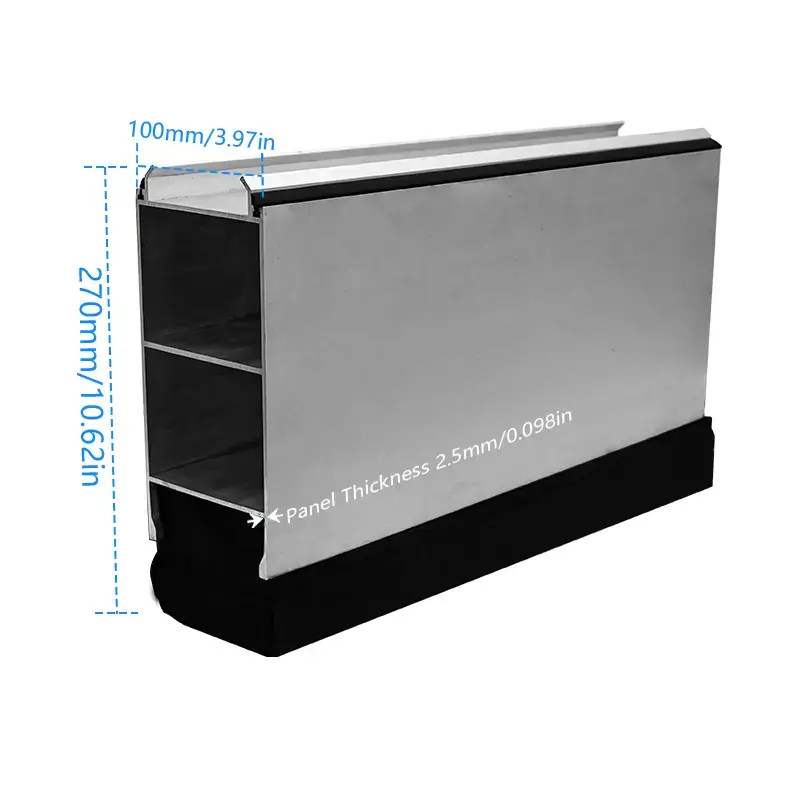
A deep hollow profile does not mean every wall is equally thick. Request the complete cross-section, including external walls and internal webs. Check that the drawing supplied with the quotation matches the section used in the calculation report.
Weight is a useful consistency check when comparing panels of the same length and geometry. It is not a stand-alone strength rating. A different section may use material more efficiently, and weighing a panel does not verify its alloy or heat treatment. Hardness alone is also insufficient to establish a complete barrier’s load capacity.
Ask for a structural calculation report for your configuration
A practical first question is: “Can you provide the structural calculation report supporting this protection height at my opening width?”
Structural calculations assess a defined design using stated loads, geometry, material properties and support conditions. Their value is that the assumptions and checks can be reviewed. Their limitation is equally important: calculations do not prove that delivered components match those assumptions.
Before accepting a report, look for:
- Identification: author, date, revision, product model and corresponding drawings.
- Design water depth: the water level being resisted, distinguished from overall panel height.
- Dimensions: clear opening width, unsupported panel spans and post spacing.
- Material inputs: alloy, temper, strength values and section dimensions.
- Complete load path: panels, posts, braces, connections, anchors and supporting construction.
- Design criteria: applicable standards, load combinations, safety provisions and deformation limits.
- Scope and conclusion: what passes, what is excluded and what the site must provide.
For a demanding project, have the relevant design professional review the report and confirm any local approval requirements. A generic “pass” page without the underlying configuration is not enough to compare suppliers.
Why 78.74-inch and 118.11-inch protection needs specific evidence
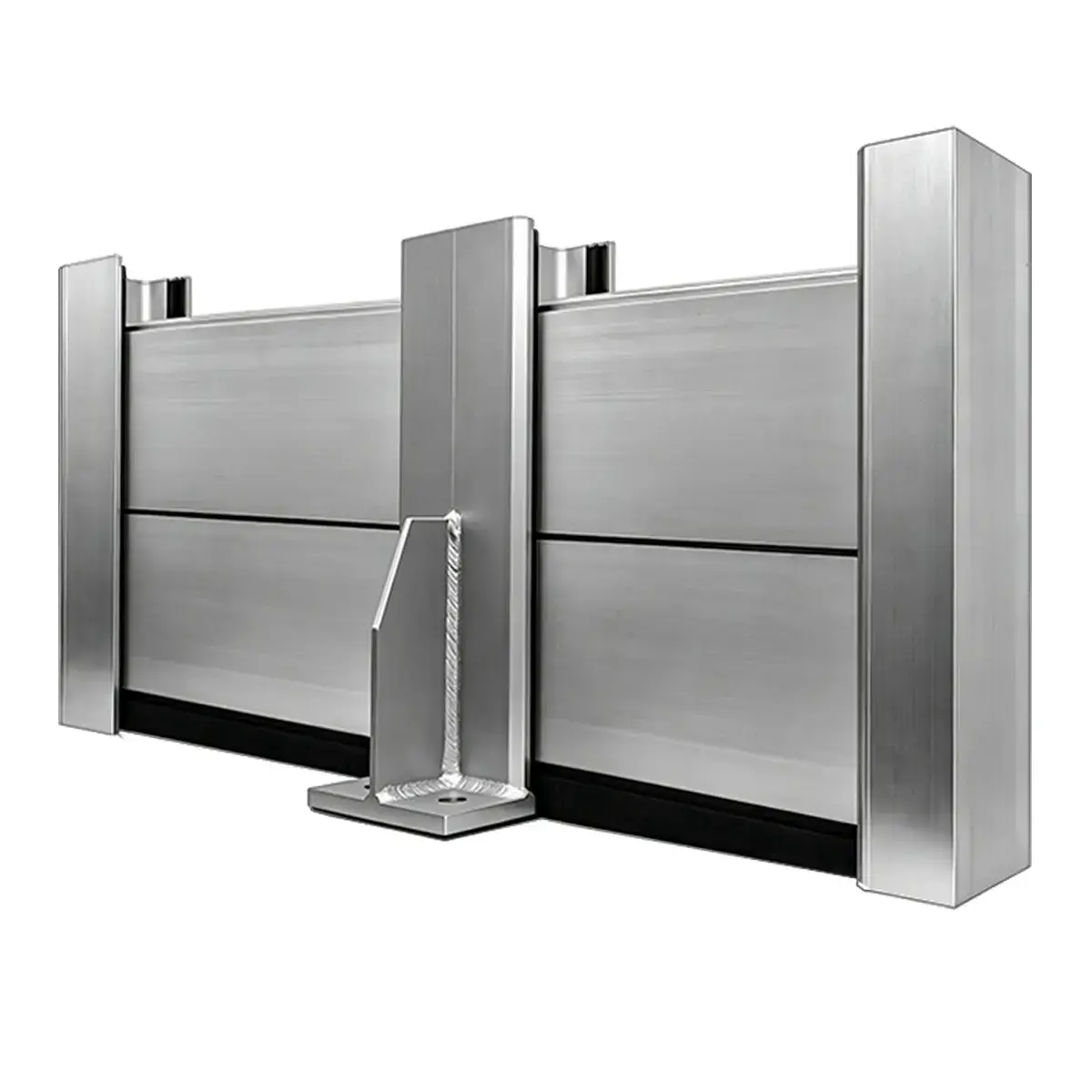
Stacking more panels does not automatically create a suitable higher-protection system. A higher design water level increases the loading, while wider unsupported spans change the demands on panels and supports.
FEMA’s Technical Bulletin 3 explains that flood shields must resist the hydrostatic load over the entire shield and have a continuous load path. For a buyer, this means checking where the load goes after it reaches the aluminum panels. Source: FEMA Technical Bulletin 3, January 2021, page 24.
A calculation for a narrower opening or a lower water level is not automatically evidence for your project. The supplier should explain how the proposed design is covered and identify any additional engineering needed.
Four documents to compare before ordering
| Evidence | What to check | What it cannot establish alone |
|---|---|---|
| Material certificate or test results | Alloy, temper, relevant mechanical properties and traceability to the supplied batch. | The capacity or leakage performance of the assembled barrier. |
| Structural calculation report | Matching height, span, section, supports, fixings and design assumptions. | Actual material conformity or watertightness. |
| Water-test report | Tested model, water depth, duration, leakage, setup and acceptance criteria. | Performance at every other height, width or installation condition. |
| Installation drawings and manual | Anchors, substrate requirements, seal preparation, assembly and inspection. | That the site has actually been built and installed accordingly. |
Keep structural calculations and physical test reports separate when requesting documents. A supplier may informally call both a “structural test report,” but they answer different questions.
FEMA P-936 discusses verification by water testing to apply the design hydrostatic load and identify leaks. It also notes that a test covers particular conditions and duration. This is why calculations and testing should be considered together. Source: FEMA P-936, Section 3.1.4.
Warning signs worth resolving before you pay
- The advertised height appears nowhere in the supporting design documents.
- The quotation specifies a different panel or post arrangement from the report.
- A report cover is supplied, but the test conditions or calculation conclusion are missing.
- The supplier promises “zero leakage” without a test method, duration or stated detection limit.
- Installation advice ignores the floor, walls, anchors or center supports.
- A certificate is presented without explaining which product and performance claim it covers.
These are reasons to ask for clarification, not automatic proof that a product is defective. A reliable comparison gives each supplier the same opening dimensions, design water level and documentation request.
Copy this request to your supplier
Please quote an aluminum flood barrier for an opening width of [___] inches and a design floodwater depth of [___] inches. Provide the proposed system drawing, alloy and temper, panel section dimensions, material verification, applicable structural calculations, water-test results and installation requirements. Please explain any differences between the documented configuration and the system quoted for my site, including exclusions and additional engineering costs.
Check the installation as carefully as the product
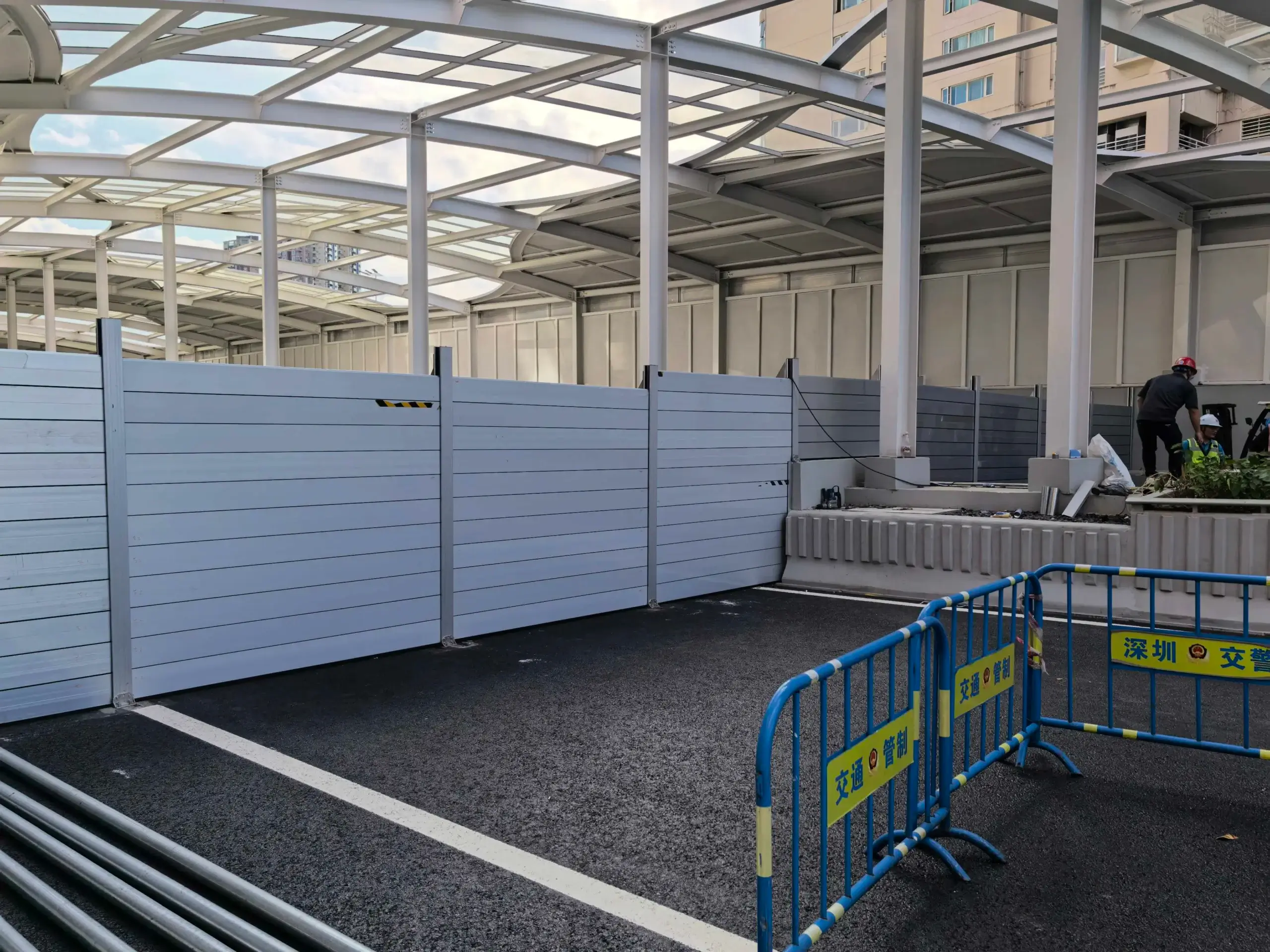
Before purchase, share photographs of the floor, side walls and surrounding area. Confirm that the supporting construction is suitable, seals can contact the intended surfaces and staff can deploy the system in time. Consider other water-entry routes and how leakage or trapped water will be managed.
Aluminum flood barrier quality: common questions
Does a heavier flood barrier always provide better protection?
No. Weight must be considered alongside geometry, material properties, span and supports. Compare documented system performance rather than weight alone.
Can a structural calculation prove that the supplied aluminum is genuine?
No. It uses declared material properties. Material records and, where appropriate, testing are needed to check that the supplied components match those inputs.
Does one report cover every flood barrier height?
No. Check the report’s scope. A higher or wider configuration needs evidence that explicitly covers it or an appropriate engineering assessment.
Request a documented Eudore configuration
Looking for removable protection for a home entrance or garage? Explore our custom aluminum flood barrier, then send your opening measurements and photos for a configuration review.
Considering aluminum flood protection up to 78.74 inches or 118.11 inches? Eudore can provide formal structural calculation documentation for the proposed configuration. Ask us to confirm the scope, availability and any project-specific requirements with your quotation.
Send your opening dimensions, target water depth, project location and site photographs. Start with our technical resources and installation guides, then request the documents applicable to your project.
Continue your research
Related flood protection reading.
Read a connected guide, comparison or project insight before choosing a protection route.
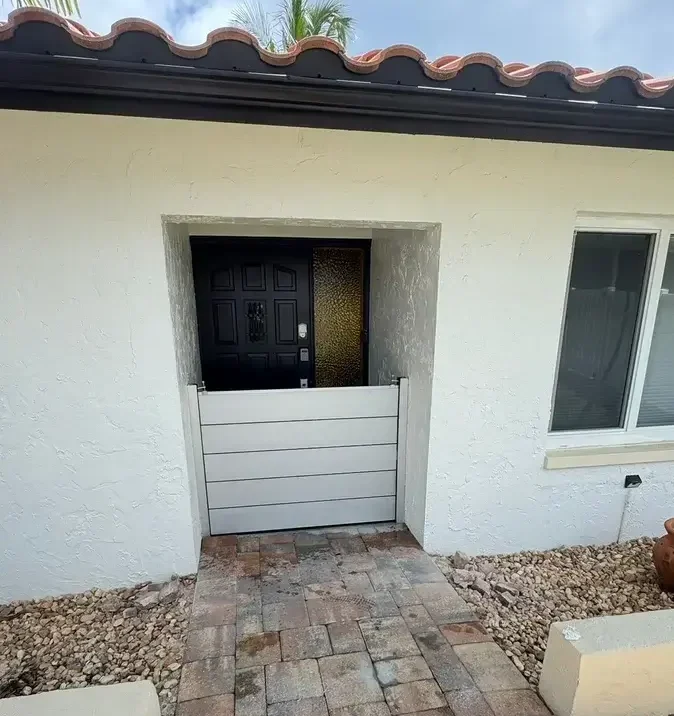
Get a custom recommendation
Tell us about the opening you need to protect.
Share the opening type, clear width, target flood height and photos. The team will review the details before recommending a configuration.